Opportunities And Challenges Of The “Belt And Road” Construction From A Global Perspective: Overseas Market Expansion And Risk Response Strategies

Opportunities And Challenges Of The “Belt And Road” Construction From A Global Perspective: Overseas Market Expansion And Risk Response Strategies
This article will analyze the infrastructure market access rules, labor policies and exchange rate risks of the countries along the “Belt and Road”, and propose country selection suggestions and localized cooperation models to provide Chinese construction companies with systematic risk response strategies. in Southeast Asia and Africa
With the in-depth implementation of the “Belt and Road” initiative, Chinese construction companies have ushered in unprecedented opportunities to expand overseas markets. As the main promoter of global infrastructure investment, the competitiveness of Chinese enterprises in the international market continues to increase, especially in the field of infrastructure construction in countries along the Belt and Road. However, in the process of expanding overseas markets, companies face many risks, especially challenges in market access, labor policies, and exchange rate fluctuations. This article will analyze the infrastructure market access rules, labor policies and exchange rate risks of the countries along the “Belt and Road”, and propose country selection suggestions and localized cooperation models to provide Chinese construction companies with systematic risk response strategies.
1. Global Market Background: The Strategic Significance of the Belt and Road Construction
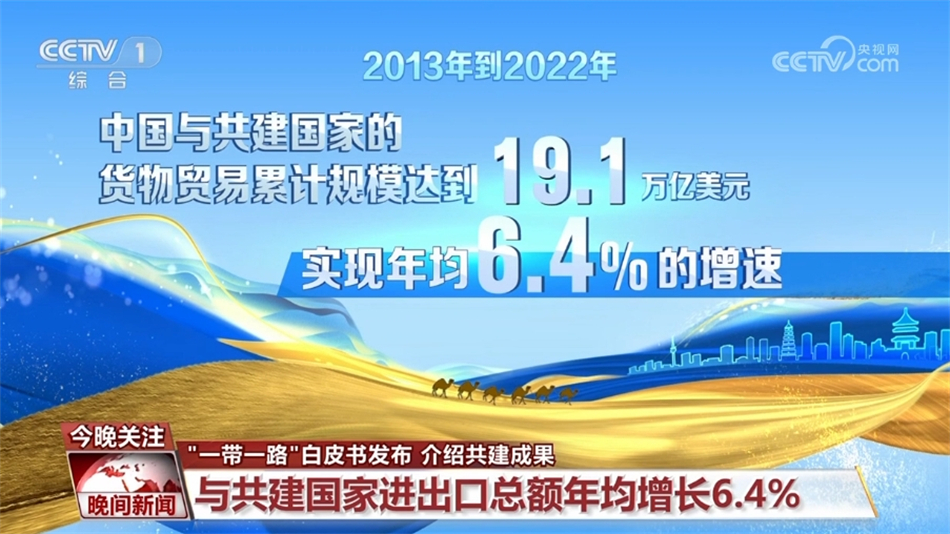
Since the "Belt and Road" initiative was proposed in 2013, it has become an important platform for China's opening up to the outside world, covering many countries and regions around the world, especially Central Asia, Southeast Asia, Africa and some European countries. This initiative not only promotes economic cooperation between China and countries along the route, but also strengthens infrastructure connectivity and improves the efficiency and quality of global trade. For Chinese construction companies, participating in the infrastructure construction of countries along the “Belt and Road” is both an opportunity for market expansion and a huge challenge.
2. Market access rules: policy differences and challenges across countries
When entering the infrastructure construction market of countries along the “Belt and Road”, one of the first challenges that Chinese construction companies must face is the market access rules of each country. These rules vary from country to country. Some countries encourage the entry of foreign-invested enterprises and provide tax incentives, financing support and other policies; other countries set higher entry thresholds for foreign investment due to domestic market protectionism, political risks and other factors.
1. Middle East: Emphasis on political and business relations and resource development
Infrastructure projects in many Middle Eastern countries often rely on close cooperation between governments and large businesses. In addition to meeting government approval procedures, Chinese companies' market access in these areas also needs to establish good political and business relationships. At the same time, countries rich in energy resources, such as Saudi Arabia and the United Arab Emirates, often have strong resource monopolies in infrastructure projects, and companies need to pay special attention to the combination of resource development and infrastructure construction.
2. Southeast Asia: Open Market and Cooperation Potential
Southeast Asian countries generally have relatively loose market access for foreign-invested enterprises, but due to differences in culture, language and legal systems, companies need to respond flexibly, especially in countries such as Thailand and Vietnam. Through cooperation with local enterprises, operational risks can be reduced and the success rate of market access can be improved.
3. Africa: Policy instability and the importance of transnational cooperation
African countries face greater challenges in market access due to factors such as unstable policies and imperfect legal systems. When Chinese companies enter these countries, they should focus on establishing mutual trust and cooperation with local governments and companies and ensuring compliance. At the same time, attention should be paid to selecting local partners with rich international experience to share project risks.
3. Labor policy: cross-cultural management and labor risks
Labor is the core resource for construction projects, and countries along the Belt and Road often have large differences in their labor policies. Understanding the labor policies of various countries and formulating scientific and reasonable employment plans have become the key to the international development of enterprises.
1. Middle East: local labor priority and foreign labor management
In the Middle East, especially in countries such as Saudi Arabia and Qatar, local workers often enjoy priority in employment. Chinese construction companies need to adopt a combination of outsourcing and local recruitment to not only meet the local government's requirements for local labor, but also ensure project progress and quality. At the same time, the management requirements for foreign workers are relatively high, and companies need to pay attention to compliance with labor laws and contract laws.
2. Southeast Asia: abundant labor force but large wage gap
Southeast Asia has a relatively abundant labor force, but due to uneven economic development, wage levels vary greatly. Enterprises need to reasonably control costs while ensuring that labor conditions comply with local legal requirements. In addition, cross-cultural management is particularly important, and employee training and cultural adaptation are also key factors for corporate success.
3. Africa: Labor shortage and education and training challenges
African countries generally face labor shortages and skills mismatches. Chinese companies need to invest resources in education and training, improve the skill level of local employees, and promote the stability and sustainable development of the labor market through skills transfer programs.
4. Exchange rate risk: foreign exchange fluctuations and financial countermeasures
In international operations, exchange rate fluctuations are one of the important risks faced by enterprises. Especially in many countries along the “Belt and Road”, due to economic instability, exchange rates fluctuate greatly, which may affect the costs and benefits of enterprises.
1. Southeast Asia and Africa: exchange rates fluctuate greatly
The economic development of many countries in Southeast Asia and Africa is relatively lagging, and their exchange rates fluctuate greatly. When signing contracts, Chinese construction companies should try to choose US dollars or euros as the settlement currency to reduce risks caused by exchange rate fluctuations. At the same time, companies can reduce exchange rate risks through financial instruments such as foreign exchange hedging.
2. Middle East: Stable Monetary Policy and Exchange Rate Risks
Compared with Southeast Asia and Africa, many countries in the Middle East, such as the United Arab Emirates and Saudi Arabia, have relatively stable monetary policies and less fluctuations in exchange rates. However, companies still need to pay attention to the impact of crude oil price fluctuations on local economies and currencies, especially in oil export-dependent economies.
5. Country selection suggestions and localization cooperation model
When expanding overseas markets, construction companies should flexibly adjust their strategies and choose appropriate market entry models and partners based on the target country's market access rules, labor policies, exchange rate risks and other factors.
1. Country selection suggestions
Southeast Asian market: For small and medium-sized enterprises, the Southeast Asian market has great potential, with low market entry barriers, abundant labor force, and relatively small cultural differences. It is suitable to enter through joint ventures or sole proprietorships to gradually expand market share.
African market: The African market has long-term construction needs, but due to political and economic uncertainty, companies should choose countries carefully. Priority is given to countries with stable political environments and strong policy support, such as Kenya and South Africa.
Middle East market: Infrastructure demand in the Middle East is strong, but market access is complicated. Companies should rely on local partners to share risks and leverage the resource advantages and government relationships of local companies to improve project success rates.
2. Localized cooperation model
Enterprises should choose appropriate localized cooperation models based on the cultural, legal, and market characteristics of different countries. For example, in Southeast Asia and Africa, they can rely on their market experience, resources and government relationships through joint ventures and cooperation with local companies; in the Middle East, foreign-funded companies need to reduce labor costs and improve corporate operating efficiency through outsourcing and labor cooperation.
in conclusion
The “One Belt, One Road” initiative provides Chinese construction companies with vast overseas market development space. However, during the development process, companies must accurately identify and respond to various risks such as market access, labor policies, and exchange rate fluctuations. By rationally selecting countries, formulating practical localized cooperation models, and effectively responding to various risks, Chinese construction companies can achieve sustained and stable development in the infrastructure markets of countries along the “Belt and Road”.

Contact us
Beijing Shanhe Real Estate Management Co., Ltd.
Since its establishment ten years ago, Beijing Shanhe Real Estate Management Co., Ltd. has always been committed to the development trends of the construction industry, market expansion model innovation, local government special bond issuance planning consultation, EOD model investment and financing, urban renewal, urban village renovation, affordable housing construction, and emergency and emergency engineering consulting and training services , is one of the few real estate management companies in China that continues to provide full-process consulting of "investment, construction, operation, and operation" for the construction industry. The company also manages and operates the largest investment promotion agency company and shared factory resources in the Yangtze River Delta, and also provides industry introduction and investment promotion business services for local governments, enterprises and institutions. The company and its partnerships possess Grade A credit rating certificates for land assessment intermediaries, Grade A qualifications for urban planning consulting, Grade A engineering consulting credit, and Grade A engineering cost consulting qualifications.
Since its establishment, Beijing Shanhe Real Estate Management Co., Ltd. has served clients including leading domestic state-owned enterprises in the field of construction, leading domestic private construction companies, government economic business departments, government parks, industrial real estate companies, leading real estate companies, local urban investment companies, and financial institutions.
The practical think tank that leads the high-quality transformation of China's construction industry has become a pillow manual for traders, a transformation headquarters for construction enterprises, and a precise connector for industrial chain resources, allowing every click to obtain executable transformation energy.