Video丨Exploring The Establishment Of A Fast And Efficient Transnational Emergency Rescue Mechanism To Shorten The Transnational Rescue Process

Video丨Exploring The Establishment Of A Fast And Efficient Transnational Emergency Rescue Mechanism To Shorten The Transnational Rescue Process
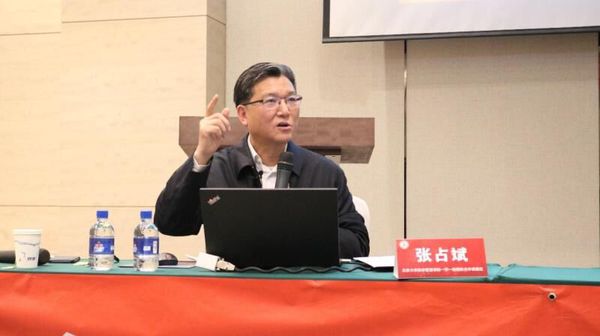
From November 5th to 7th, the 2025 “Belt and Road” Ministerial Conference on Natural Disaster Prevention and Emergency Management was held in Sanya, Hainan. Relevant parties reached a consensus on how to establish a fast and efficient emergency rescue mechanism. current
At present, natural disaster accidents have become a common risk faced by the development of all countries, especially some developing countries, which have high natural disaster risks and weak disaster resilience. Relevant countries and regions conducted in-depth discussions on how to establish a fast and efficient emergency rescue mechanism, and unanimously decided to explore direct dialogue and docking between emergency management departments among member countries when a disaster occurs in member countries, quickly launch international rescue based on the disaster situation, and further shorten the transnational rescue process.

This year, a 7.9-magnitude earthquake occurred in Myanmar, a member country of the Belt and Road International Cooperation Mechanism for Natural Disaster Prevention and Emergency Management. The mechanism responded quickly, and China sent a rescue team to successfully carry out cross-border rescue in Myanmar. Since the cooperation mechanism was launched in 2021, China's rescue forces have gone to nine countries to carry out major rescue and rescue tasks such as emergency search and rescue, material assistance, and medical treatment, and rescued a total of 77 earthquake disaster survivors, practicing the concept of a community with a shared future for mankind with practical actions.

CCTV reporter Tang Guorong: In order to further enhance joint disaster response capabilities and share practical experience in emergency rescue, Hainan also held a large-scale water rescue comprehensive drill during this ministerial meeting. What is going on behind me is to simulate dangerous situations such as multiple ship collisions and people falling into the water under extreme weather, and rescue scenes by fire rescue personnel.

During the drill, the drone took the lead in taking off to conduct reconnaissance of the accident sea area, and the real-time feed back images provided key information for command decision-making. Subsequently, four load-bearing drones flew to the accident area, accurately threw lifebuoys in the area where people fell into the water, and used special lifting modules to transport the injured. On the water, multiple teams rushed forward in coordination, using all-terrain support fire trucks, underwater robots and other equipment to rescue the trapped people on the ship deck and underwater.