More Than Ports, Roads And Railways: China’s Economic Strategy, Belt And Road Initiative And Financial Infrastructure

More Than Ports, Roads And Railways: China’s Economic Strategy, Belt And Road Initiative And Financial Infrastructure
Source: Johannes Petry, “Beyond ports, roads and railways: Chinese economic statecraft
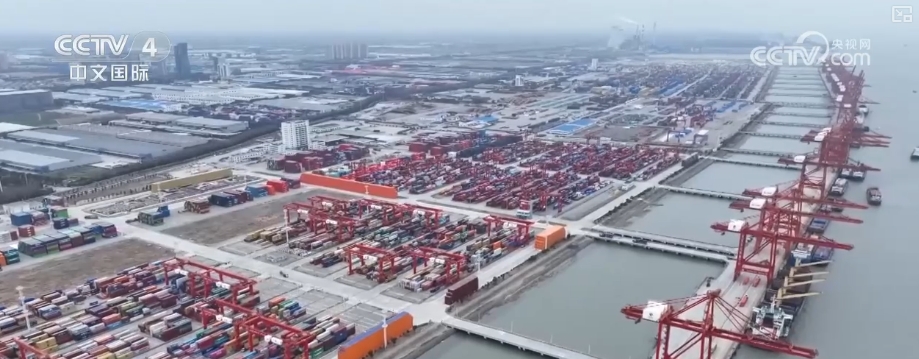
During the implementation of the Belt and Road Initiative (BRI), global attention often focuses on China’s interconnection through the construction of physical infrastructure such as ports, roads, and railways, and regards it as a source of power. This article proposes that what truly supports the continued operation of the “Belt and Road” may not be steel and concrete, but the invisible “financial infrastructure” ( ). As the financial game between China and the United States intensifies, China's layout in overseas capital markets is quietly changing the global financial landscape.
How does China use its economic strategy ( ) to reshape its position in the global financial order by building financial infrastructure related to the “One Belt, One Road” initiative? This article places the construction of China's financial infrastructure along the "Belt and Road" in the context of the liberal global financial order led by the United States, regards it as an important measure for China to implement its economic strategy, and distinguishes two types of economic strategies: "exploratory/bilateral" and "defensive/systemic". Chinese state-owned enterprises are the core actors in promoting financial interconnection. Their role is reflected in three aspects: providing investment channels for “Belt and Road” projects (creating investment opportunities), guiding Chinese investors to enter the “Belt and Road” market (building investor structures), and gradually shaping the operating rules of these markets (formulating investment rules). The article selects Pakistan, Kazakhstan, and Bangladesh as cases and uses them as practical examples of China’s “bilateral level” economic strategy.
The research conclusion points out that China is breaking through the limitations of the US-led liberal global financial order (GFO) and leading a new financial infrastructure system, which has improved the financing sustainability of “Belt and Road” projects. This article expands the understanding of the Belt and Road Initiative from international political economy (IPE) and international relations (IR), brings financial infrastructure into the analytical perspective, and reveals the key role of financial networks as a new form of power in the transformation of the global order.
Infrastructure, Capital Markets and the Global Financial Order (GFO)
(1) Financial infrastructure: empowering national governance through connectivity
What are the connections between financial infrastructure, power and statecraft? Financial strategy refers to the means by which a national government intentionally uses domestic or international monetary and financial capabilities to achieve sustained foreign policy goals, including political, economic, and financial goals. It is part of the economic strategy. Its scope is "bilateral" or "systemic", and its nature is "pioneering" (exerting power outward to counter other actors) or "defensive" (maintaining policy autonomy). Infrastructure creates connections between different locations and entities, allowing specific socioeconomic transactions to occur. Structural power can be exercised through infrastructure when cross-border infrastructure projects result in asymmetric relations between states. Actors who control financial market infrastructure have enormous power to shape financial markets. The capital market’s organizational structure, dominant forces, and the constraints and incentive mechanisms it faces all have global impacts.
(2) Differentiated organization of capital markets between China and global exchanges
The contemporary global financial order is based on the financial market principles of profit-oriented (-), loose supervision (), and international integration (). It is guaranteed by the strength of the United States and in turn strengthens the strength of the United States. Different from following profit-oriented rules, being penetrated by global investors and integrating into the global network of exchanges centered on the United States, Chinese exchanges are committed to promoting the construction of a “Belt and Road” capital market with Chinese characteristics (see Table 1): First, further broaden investment channels by listing “Belt and Road” related corporate stocks, bonds, funds and other products ( investment opportunities); the second is to integrate these countries into China's financial circulation system while attracting Chinese investors/brokerages to enter the "One Belt, One Road" market and increase the participation of Chinese capital (investor structure); the third is to train exchange practitioners and introduce financial infrastructure closer to the Chinese model to reshape the operating mechanism of the capital market (investment rules).
Table 1: Differences between global capital markets and capital markets with Chinese characteristics

Building China’s financial infrastructure along the Belt and Road Initiative
Although the "Vision and Actions to Promote the Joint Construction of the "Belt and Road"" issued by the Chinese government as early as 2015 proposed extensive financial integration measures, the traditional "Belt and Road" financing model dominated by government loans has gradually exposed multiple problems. First, long-term loans cause a mismatch in the maturity of bank assets and liabilities, thereby increasing the fragility of the financial system. Therefore, the capital market must provide support for the Belt and Road Initiative. Secondly, as countries increasingly question China's loans and debt investments, capital market-based financing can help avoid accusations of "debt trap diplomacy." Thirdly, by building the “Belt and Road” capital market system, Chinese exchanges can create a more efficient market environment and promote the optimal allocation of resources. Finally, by shaping the financial connectivity system of the Belt and Road Initiative, China can have greater bargaining power when negotiating with countries along the route.
Therefore, the capital market is the key solution to solve the financing dilemma of the “Belt and Road Initiative”. Countries along the “Belt and Road” generally hope to improve their “underdeveloped” capital markets, while Western-led global exchanges often ignore these areas due to limited profits. In the "financial vacuum" when international banks and exchanges withdrew, Chinese financial institutions quickly filled the void, relying on their status as "South-South Cooperation" and "developing country partners" to promote their successful capital market experience.
(1) Pakistan Stock Exchange: Financial Connectivity of the China-Pakistan Economic Corridor
The case of Pakistan Stock Exchange (PSX) vividly demonstrates how China promotes financial connectivity through the “One Belt, One Road” initiative. China's three major exchanges (China Financial Futures Exchange, Shanghai Stock Exchange, and Shenzhen Stock Exchange), together with Habib Bank and China-Pakistan Investment Company, acquired 40% of PSX shares for 896 million rupees and became its controlling shareholder. The investment not only brought funds, but also reshaped the governance structure of PSX through a majority of the board of directors and the right to appoint senior executives, allowing the Chinese exchange to replace the dominant position of local brokers and regulators. In terms of investment rules, PSX adopts the Shenzhen Stock Exchange’s trading and regulatory system and introduces real-time monitoring and data tracking mechanisms, which significantly improves market transparency and effectively eliminates internal corruption and data leakage issues. In terms of investment opportunities, China actively promotes financial product innovation and finances China-Pakistan Economic Corridor (China-, CPEC) projects through the capital market. In terms of investor structure, Chinese-funded institutions have promoted in-depth integration of the capital markets of the two countries by acquiring equity interests in Pakistani securities firms, organizing roadshows, and expanding market access for Chinese investors. Habib Bank has thus become a key financial intermediary in executing CPEC financing. With the full entry of Chinese capital, Pakistan's stock market has gradually synchronized with the Chinese market, and its financial system has been substantially integrated into the Chinese-led capital network.
(2) Astana International Exchange: an international financial center built in Kazakhstan and supported by China
The case of Kazakhstan’s Astana International Exchange (AIX) demonstrates how China can build a regional financial center and expand its financial influence through the “One Belt, One Road” initiative. AIX is the core project of the Astana International Financial Center (AIFC), which aims to build Kazakhstan into a financial hub connecting Central Asia, Russia, the Arab world and China. In 2017, the Shanghai Stock Exchange acquired 25.1% of AIX's shares and became the largest shareholder; subsequently, Silk Road Fund also held 5% of the shares. In terms of investment rules, unlike Nasdaq's purely commercial cooperation, the Shanghai Stock Exchange is deeply involved in the governance of AIX. Its executives have joined the board of directors and served as deputy general managers, and sent teams to participate in market construction, system design and cross-border financial interconnection between China and Kazakhstan. AIX has become an important offshore center to promote the internationalization of RMB, and its market mechanism supports RMB-denominated transactions, clearing and settlement. In terms of investment opportunities, the Kazakh government plans to use AIX to promote the privatization of state-owned enterprises, focusing on attracting Chinese investors to invest in energy, electricity, railways, telecommunications and other fields. In 2019, AIX established the “Belt and Road” sector denominated in RMB to specifically serve China-Kazakhstan cooperation and “Belt and Road” project financing. At the same time, AIFC is also planning to apply for a Qualified Domestic Institutional Investor (QDII) quota to further open up direct channels with China’s capital market. In terms of investor structure, under the leadership of the Shanghai Stock Exchange, China Development Bank, CITIC Group, CICC, and China Construction Bank successively settled in AIFC, issued the first RMB bonds, and formed a cluster of 94 Chinese-funded financial enterprises including securities firms, insurance companies, and settlement institutions. The establishment of AIX is an important measure for China to actively build the “Belt and Road” financial connectivity network. By building high-level financial infrastructure, it will provide high-quality financial services and contribute to China’s solutions to the joint construction of the “Belt and Road”.

Figure 1. AIX as an emerging “Belt and Road” financing center
(3) Dhaka Stock Exchange: China and India’s dispute over financial infrastructure in Bangladesh
The case of Dhaka Stock (DSE) reveals the game between China and India competing for dominance of financial infrastructure in Bangladesh. In 2017, Bangladeshi regulators sought strategic investors after the exchange partially removed its membership system. In the end, a consortium composed of China's Shanghai Stock Exchange and Shenzhen Stock Exchange defeated the bidders composed of India's National Stock Exchange (NSE) and Nasdaq and obtained 25% of the shares. This move is not only a commercial investment, but also reflects the geostrategic considerations of serving the "Bangladesh-China-India-Myanmar Economic Corridor". India strongly opposed this and tried to block the transaction, indicating that financial infrastructure has become a new frontline in regional competition between China and India. After the acquisition, China Exchange entered the DSE board of directors and led operational reforms, weakening the control of brokers and promoting the modernization of trading platforms, regulatory systems and internal management. In terms of investment rules, the Shenzhen Stock Exchange will replace the Nasdaq system in 2023 and introduce the same Chinese-style trading and monitoring system as PSX to achieve refined supervision of market behavior. The two parties also established a joint venture to promote Chinese financial technology to Bangladesh and formulate trading rules based on Chinese standards. In terms of investment opportunities, China has launched a small and medium-sized enterprise sector and the “One Belt, One Road” bond market to attract Chinese long-term capital. In terms of investor structure, through index, data and platform interconnection, DSE is being included in China’s capital market network and becoming a key node in the “China-Bangladesh Financial Corridor”. Overall, China Exchange has reshaped the institutional logic of Bangladesh’s capital market by defining investment rules, products and market structures, and promoted the extension and embedding of the “One Belt, One Road” initiative at the financial level in South Asia.
(4) The financial infrastructure network being formed along the “Belt and Road”
Chinese exchange investments in Pakistan, Kazakhstan and Bangladesh (see Table 2) demonstrate the potential of financial infrastructure as a tool for “pioneering” and “bilateral” economic strategies. China Exchange actively cooperates with countries along the “Belt and Road” in financial infrastructure, strengthens coordinated regional economic development, and lays a solid foundation for realizing common prosperity along the “Belt and Road”.
China is forming a financial infrastructure network with capital market interconnection as its core: including acquiring or co-building exchanges, promoting cross-exchange cooperation, attracting Chinese capital to enter overseas markets, and signing multi-level cooperation agreements.
Table 2: China’s acquisition of financial infrastructure along the Belt and Road Initiative
As a result, a parallel capital market system with China's experience and rules as its core is gradually taking shape, providing China with greater institutional autonomy in the global financial system. At the same time, Sino-Russian financial infrastructure cooperation also reflects "defensive" and "systemic" characteristics. Through RMB-Ruble transactions and alternative payment systems, it weakens the dominance of the US dollar, reduces the impact of the United States' "financial weaponization", and further consolidates the "Belt and Road"'s ability to protect itself from external financial pressure.
in conclusion
China's practice of building financial infrastructure in countries such as Pakistan, Kazakhstan and Bangladesh shows that financial connectivity is becoming a new pillar of China's economic strategy. Through investment and cooperation with state-owned exchanges, China not only creates financing channels for “Belt and Road” projects, introduces Chinese investors, and reshapes market rules, it also invisibly reconstructs power relations with countries along the route. This network with financial infrastructure as its core is gradually forming a capital market system parallel to the US-led system, allowing China to gain greater institutional autonomy and influence in the global financial order. However, this system is still in its early stages and its effects have not yet been fully realized. The characteristic of financial infrastructure is that it indirectly shapes the power structure by building connectivity relationships. As these interconnected networks expand, China is able to exert more indirect influence on the global financial structure.
Future research should further explore the actual economic consequences of these infrastructures, particularly how commercial investors take advantage of state-led construction systems and whether this shift can replace debt-driven financing models. In addition, new trends such as Sino-Russian financial cooperation, the RMB cross-border payment system (CIPS), and Chinese financial technology companies going overseas may also reshape the financial power structure at the global level.
Financial infrastructure provides a new perspective for understanding global financial power. The United States maintains its institutional advantage over the long term by controlling core exchanges and financial technology, while China explores another path to globalization by building a capital market system centered on itself. The real significance of “One Belt, One Road” goes beyond ports, highways and railways, and lies more in the invisible financial infrastructure that profoundly affects the operation of the global economy.
Translator: Yan Luyu, compiler and scholar of national politics, School of International Relations, Tianjin International Studies University.
Source: Petry, “ ports, roads and : , the Belt and Road and the of ,” of , Vol.29, No.2, 2023, pp.319-351.
Proofreading | Ji Jinhai
Typesetting | Shi Xuan