GCC Countries Actively Embrace The “Belt And Road” (global Hot Spot)

GCC Countries Actively Embrace The “Belt And Road” (global Hot Spot)
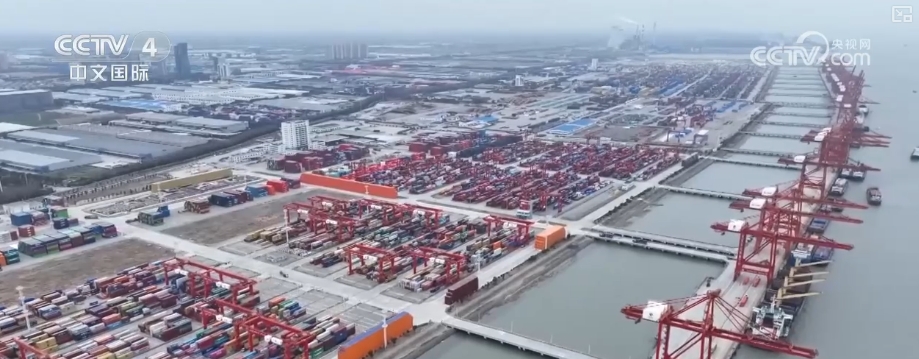
Recently, "Asia House", an independent think tank based in London, UK, quoted data from the International Monetary Fund (IMF) and pointed out that in 2024, the six Gulf countries UAE, Saudi Arabia, Qatar, Kuwait, Oman and Bahrain will have a trade volume with China of US$257 billion.
Recently, "Asia House", an independent think tank based in London, UK, cited data from the International Monetary Fund (IMF) and pointed out that in 2024, the six Gulf countries, the United Arab Emirates, Saudi Arabia, Qatar, Kuwait, Oman and Bahrain, had a trade volume with China of US$257 billion, exceeding the total trade volume of the six countries with the United States, the United Kingdom and Eurozone countries of US$256 billion. The report predicts that by 2028, total trade between Gulf countries and China will increase to US$375 billion.
Behind the dazzling data is another "two-way rush" between civilizations at both ends of the ancient Silk Road spanning thousands of years. In recent years, the cooperation between China and the member states of the Gulf Cooperation Council (GCC) has been increasing, the areas of cooperation have continued to expand, and cooperation results have continued to emerge. This newspaper talked with Sun Degang, director of the Center for Middle East Studies at Fudan University, and Wang Jin, associate professor at the Institute of Middle East Studies at Northwest University, to explain how China and the GCC countries have crossed mountains and seas to write a new chapter in Silk Road friendship.
fruitful results
"The cooperation between the two parties has expanded from the energy field as the core to technology, infrastructure construction, green and clean energy, aerospace and other emerging fields."
【observe】
A latest report released by the independent think tank "Asia House" citing IMF data pointed out that the deepening cooperation between China and Gulf countries in non-oil and gas fields such as renewable energy and construction will promote the further expansion of trade cooperation between Gulf countries and China.
In May this year, China announced a trial unilateral visa-free policy for four Gulf Arab countries: Saudi Arabia, Oman, Kuwait, and Bahrain. Together with the UAE and Qatar, which have fully exempted each other from visas in 2018, China has achieved "full coverage" of visa-free for GCC countries, providing more convenience for accelerating personnel exchanges and exchanges and cooperation in multiple fields.
【Interpretation】
Sun Degang: Cooperation between China and GCC countries has become a model for China-Arab cooperation. In December 2022, China emphasized at the first China-Gulf Arab States Cooperation Council Summit that in the next three to five years, China is willing to make efforts with the GCC countries in five key areas of cooperation. Today, the cooperation between the two parties has expanded from the traditional energy field to an all-round, multi-dimensional and in-depth collaboration in the new era, showing many highlights -
First, energy cooperation has achieved remarkable results. In addition to traditional energy sources such as oil and gas, natural gas, China and the GCC countries are cooperating in clean and low-carbon energy technologies such as hydrogen energy, energy storage, wind power and photovoltaics, and smart grids. Second, investment cooperation continues to heat up. In recent years, many GCC countries have continued to increase investment in China, demonstrating the resilience and potential of bilateral cooperation. Third, innovation and cooperation are at the forefront. China and GCC countries have deepened cooperation in emerging fields such as artificial intelligence, 5G, and big data, creating benchmark cases for innovative cooperation in multiple fields. Fourth, the scale of trade has expanded steadily. The trade volume between China and the GCC countries continues to grow, accounting for a very high proportion of the overall trade volume between China and Arab states, and has become an important pillar of cooperation between the two sides. Fifth, people-to-people and cultural exchanges continue to deepen. The establishment of a Confucius Institute in Saudi Arabia and the establishment of a Chinese Cultural Center in Kuwait have laid a solid foundation for people-to-people connectivity.
Wang Jin: Currently, the cooperation between China and GCC countries presents several new highlights:
First, the areas of cooperation are constantly expanding. The cooperation between the two parties has expanded from the energy field as the core to emerging fields such as technology, infrastructure construction, green and clean energy, aerospace, etc. In the future, they will continue to deepen cooperation in cutting-edge fields such as artificial intelligence and continuously enrich the connotation of cooperation. Secondly, the cooperation mechanism is becoming increasingly mature. In the past, cooperation between the two parties mostly relied on spontaneous linkages between enterprises and institutions. Now, multi-level and normalized cooperation mechanisms such as summits, expos, and ministerial meetings have been established, which provide a strong guarantee for the implementation of cooperation and make cooperation more stable and efficient. Finally, the cooperation network continues to expand. The cooperation between the two sides has not only strengthened the bilateral ties between China and Gulf Arab countries, but also used it as a link to expand cooperation channels between China and other Arab countries.
Powerful
"China's development and the collective rise of Asian countries have created huge development opportunities, attracting Gulf Arab countries to 'look east'"
【observe】
Currently, all six GCC member states have signed cooperation documents with China on jointly building the “Belt and Road”. The “Belt and Road” projects undertaken by Chinese companies are spread across the GCC countries——
In the United Arab Emirates, the Maktoum Solar Park Phase IV CSP integrated power generation project stands majestically in the vast desert. It not only lights up thousands of homes in Dubai, but also creates nearly 50,000 local jobs; in Saudi Arabia, the Jeddah City Center Comprehensive Development Center on the west coast Development infrastructure projects are being accelerated, and carefully designed landscaping has become a beautiful local scenery; in Kuwait, in the vast desert 25 kilometers southwest of the capital Kuwait City, a modern new city covering an area of 64 square kilometers is rising...
【Interpretation】
Wang Jin: China and the GCC countries are promoting the joint construction of the “One Belt, One Road” initiative. The driving force comes from the strong complementarity between the two sides. On the one hand, the GCC countries rely on their own energy and economic advantages to promote domestic industrial upgrading and build a more efficient economic development model; on the other hand, China has achieved world-renowned development achievements through reform and opening up, and is willing to share its development experience with countries in the global South, including the GCC countries. Against this background, the two sides have taken the opportunity of jointly building the "Belt and Road" to strengthen the docking of development strategies and continue to promote deeper and more practical cooperation in various fields.
Sun Degang: The attraction of jointly building the "Belt and Road" to the GCC countries mainly stems from two aspects: First, China's development and the collective rise of Asian countries have created huge development opportunities, attracting Gulf Arab countries to "look east"; second, China's developed manufacturing industry and vast market have formed complementary advantages with the GCC countries' strong sovereign wealth funds. The GCC countries hope to seize the dividends of China's rapid development and further enhance their influence in Asia.
Cooperation between China and GCC countries also has solid support. From a conceptual point of view, China and the GCC countries both understand that they are countries in the Global South and have consistent development aspirations and goals. From a practical point of view, both sides have government-led mid- and long-term development plans, such as China's "Five-Year Plan", Saudi Arabia's "Vision 2030", the UAE's "National Development Strategy for the Next 50 Years", Oman's "Vision 2040", etc. All parties can strengthen strategic alignment in development and achieve complementary advantages.
Mutual benefit and win-win
"The cooperation between China and the GCC countries not only helps the two sides tighten the bonds of friendly relations, but also drives the deepening of cooperation between China and the entire Middle East region."
【observe】
GCC countries highly recognize bilateral and multilateral cooperation with China. Recently, Mahmoud Abdul-Hadi, Deputy Minister of Tourism of Saudi Arabia, said during the 26th United Nations Tourism Organization Conference that China is an important partner for Saudi Arabia to develop tourism.
In May this year, the ASEAN-China-GCC Summit was held in Kuala Lumpur, Malaysia, and was regarded as a major initiative in regional economic cooperation. GCC Assistant Secretary-General Abdulaziz Alouwaishej published an article in the Saudi media stating that the three parties have a common goal: to inject certainty into the global market and restore confidence in multilateral mechanisms.
【Interpretation】
Wang Jin: Taking the opportunity of jointly building the "Belt and Road", the cooperation between China and the GCC countries not only helps the two sides tighten the bonds of friendly relations, but also drives the deepening of cooperation between China and the entire Middle East. It also helps strengthen collaboration within the Arab world, especially among the Gulf Arab countries, and lays a solid foundation for building a stable and orderly regional order.
More importantly, taking the ASEAN-China-GCC Summit as an example, the cooperation between the two parties broke through the traditional geographical limitations and bilateral cooperation models, highlighting the unique advantages of multilateral coordination and multi-regional superposition, which is conducive to promoting cooperation to a deeper level and making more contributions to regional development.
Sun Degang: Cooperation between China and GCC countries not only benefits both parties, but also has important demonstration significance. Cooperation between China and GCC countries has steadily advanced and demonstrated results, setting a model for cooperation between countries with different political systems and providing experience for cooperation among countries in the Global South. At the same time, both China and the GCC countries are exploring modernization paths that suit their national conditions. The process of both parties developing themselves through pragmatic cooperation is in itself a useful exploration of the modernization paths of developing countries.
It is worth noting that with the collective rise of Asian countries and the increasing power of countries in the Global South, China's "Belt and Road" initiative is extending westward, echoing the "Look East" strategy of the GCC countries, and both parties are actively exploring new paths for cooperation with third-party markets. Among them, the China-GCC-ASEAN cooperation model is of great exemplary significance. This is not only collaboration among countries in the Global South, but also cooperation within the Asian region. It is also an innovative attempt of "bilateral linkage small multilateral collaboration". It will help promote the construction of more independent industrial chains, supply chains and value chains in the countries of the Global South on the basis of equality and mutual benefit. It will help unlock new opportunities for regional cooperation and promote the formation of a fairer and more resilient global development pattern.