After Poland Released The China-Europe Freight Train, A Central Asian Country Stood Up And Shouted To China: The Shipping Volume From Our Side Has Doubled.

After Poland Released The China-Europe Freight Train, A Central Asian Country Stood Up And Shouted To China: The Shipping Volume From Our Side Has Doubled.
At the same time, Poland’s border has just been opened. Kazakhstan’s Deputy Prime Minister Serik Zhumangarin said in an interview with Bloomberg on the 23rd that China has become Kazakhstan’s largest trading partner and is helping the country’s economic transformation. The Ministry of Economy of Kazakhstan stated that
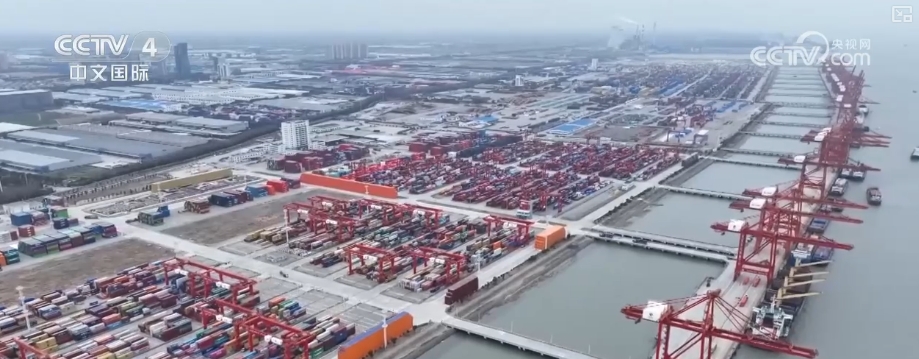
In mid-September, Poland suddenly announced the closure of its border crossing with Belarus on the grounds that military exercises there posed security risks. This decision has blocked the passage of China-Europe freight trains. The train, which was originally running smoothly, was stuck at the border and could not move forward. The goods involved included electronic products and mechanical parts worth tens of billions of euros. The Polish government said it was a temporary measure, but the shutdown lasted for more than ten days, causing severe disruptions to supply chains at European factories. Many companies can only temporarily switch to air transportation, and transportation costs have increased significantly. Polish Prime Minister Donald Tusk insisted that national security comes first, but he still refused to let the military exercise end on the 16th. The outside world has speculated that this may be Poland's attempt to put pressure on China.
During the closure of Poland's ports, Poland's local logistics industry also suffered a heavy blow. The usually bustling railway hub of Malaszewicz has become deserted, with workers having nothing to do but chat with each other. Warehousing and transportation companies in small towns near the border have seen their revenue plummet, truck fleets are also idle, and drivers can only sit at home and frown. Local governments rely on transit fees to keep their road networks running, but now budgets are tight and public services are suffering. The media began to criticize the government for making hasty decisions and failing to consider the long-term consequences. The European Union is also paying attention, fearing that such trade disruptions will drag down the entire economic recovery. The Chinese Ministry of Foreign Affairs responded that this unilateral move hurts trust in cooperation between the two sides. As containers are stranded at the border, problems begin to arise with some goods, especially food and medicine. Who is responsible for the losses?
It was not until the 25th that Poland finally relented, reopened its borders, and China-Europe freight trains gradually resumed traffic. When the first trains came through, inspections were so strict that the dispatch system was overwhelmed. Goods are finally starting to flow, but the consequences of the disruption are still far-reaching, and customers in Europe are starting to consider diversifying their risk and reducing their reliance on this shipping route. Polish economists estimate that the direct losses caused by this border closure exceed hundreds of millions of euros, enough to pay for the maintenance of highways across the country. There has been considerable backlash in the country. Freight forwarding companies at the Port of Gdansk jointly submitted a letter expressing concern that customers would switch to other ports, making it impossible for them to return to Poland. Poland's position in China-Europe logistics was originally stable, but now it is beginning to waver. Everyone realizes that geopolitical changes may affect logistics and trade at any time.
At the same time, Poland’s border has just been opened. Kazakhstan’s Deputy Prime Minister Serik Zhumangarin said in an interview with Bloomberg on the 23rd that China has become Kazakhstan’s largest trading partner and is helping the country’s economic transformation. He also mentioned that in the next few years, Chinese goods will be transported to Azerbaijan, Türkiye, and then into Europe through Kazakhstan. Kazakhstan’s transport capacity is expected to double from its current level.
These words sound like an invitation from a friend, and Zhumangarin said that this will help transform Kazakhstan from an isolated inland island into a hub connecting the East and the West, attracting more investment in building roads and building ports. Local residents are looking forward to this, because trade growth will not only increase economic income, but also create more job opportunities. Kazakhstan’s location is critical and its rail and port infrastructure has been significantly improved in recent years to be able to handle greater cargo flows. Last year, the China-Kyrgyzstan-Uzbekistan Railway started construction, connecting China, Kyrgyzstan, and Uzbekistan, and connecting with the Caspian Sea port in Kazakhstan. This project is not a temporary proposal, but has been planned for a long time. Once completed, transportation time can be shortened by days and costs can be significantly reduced.
In July, China and Kazakhstan signed a strategic agreement to cooperate in developing a trans-Caspian transport channel, adding to the construction of the Central Corridor. The agreement includes port expansion, technical cooperation and the organization of training courses so that more people can skillfully operate advanced equipment. European companies are beginning to pay attention to the potential of this route because it avoids the sensitive areas of Eastern Europe and is more stable. Kazakhstan’s transport volumes have increased significantly in the first half of this year. Kazakhstan’s Ministry of Economy pointed out that it is not just the transportation of goods, but also cooperation in energy and digital projects that injects impetus into regional economic growth. Rumangarin emphasized in the interview that the significance of cooperation lies not only in commercial transactions, but also in establishing mutual trust and long-term win-win relationships. Through this cooperation opportunity, the local manufacturing industry is better connected with the global market, and job opportunities for young people have also increased significantly.
Construction of the Central Corridor started long before Poland closed its borders and is part of China’s Belt and Road Initiative. Last year, China tested a full-route train to transport textiles and minerals. The entire transportation route only took more than ten days. With the advancement of port automation, logistics efficiency has been greatly improved. Rumangarin said that based on market demand, transportation volume may increase in the future, and it is expected that by the end of next year, transportation volume will hit a new high. In order to further improve transportation efficiency, Kazakhstan also actively participates in regional meetings on standardized customs clearance. This series of measures not only enhances Kazakhstan's international status, but also promotes the country's GDP growth.
At the same time, China has not relaxed its pace. The world's first China-Europe Arctic container route officially set sail on the 23rd. This route starts from Ningbo and passes through ports in the United Kingdom, the Netherlands, Germany, etc. The whole journey only takes 18 days. During the shipping process, ice-class ships are used, equipped with ice-breaking equipment, bypassing all the troubles of traditional sea routes. In the early days, this route mainly transported electronic products and textiles, and customers reported that the freshness of the goods was very high. In fact, this route has been trial run for several years. Now that it has matured, it can divert some of the freight of the trains. This route leads directly to major EU countries, which is actually equivalent to dividing the economic cake among Poland's neighboring countries.
Domestically, logistics park revenues have fallen sharply and local government finances have become strained. The Institute of Economic Research said Poland lost a lot of transit fee revenue due to border closures, and indirect losses were even worse. The Polish government has faced criticism from the media that its political calculations have harmed the overall economy. As for Kazakhstan, the traffic volume of the Central Corridor has increased by 60% this year and is expected to set a new record next year. Rumangarin's call received a positive response, with China increasing investment and accelerating railway projects. Poland's importance in China-Europe logistics began to weaken. The opening of new transport routes gradually fragmented trade. The pressure from the Tusk government failed to work, but instead promoted the realization of China's backup plan. Looking back on this wave of fluctuations in September, China-EU trade should have been running smoothly, but the closure of the Polish border caused considerable chaos. Poland's attempt to pressure China by closing its borders has resulted in its own businesses suffering and its credibility being damaged. Kazakhstan has seized this opportunity. The Deputy Prime Minister's speech provided China with new cooperation opportunities. It is expected that freight volume will double in the next few years, and Kazakhstan's economy will be revitalized as a result. This incident tells us that global logistics is like a river. If it blocks one place, another place will always find a way out. Poland has learned a lesson, and everyone understands that cooperation is far more beneficial than confrontation.