Silk Road: The Golden Passage Connecting Ancient And Modern Times

Silk Road: The Golden Passage Connecting Ancient And Modern Times
Silk Road: The golden passage connecting ancient and modern times When mentioning the Silk Road, many people will immediately think of the caravans that crossed deserts and mountains, carrying silk, spices, and gems from the east to the west, ushering in the golden age of exchanges between Eastern and Western civilizations.
Silk Road: the golden passage connecting ancient and modern times
When it comes to the Silk Road, many people will immediately think of the caravans that crossed deserts and mountains, carrying silk, spices, and gems from the East to the West, ushering in the golden age of exchanges between Eastern and Western civilizations. This ancient trade route is not only a passage for goods, but also a link where culture, thought, and technology blend, which has profoundly affected the direction of world history.
The Silk Road originated during the Han Dynasty around the 2nd century BC. It was originally a trade route from China westward to Central Asia and the Mediterranean. Over time, it developed into a vast network of land and sea routes, connecting the three continents of Europe, Asia, and Africa. Cities along the way, such as Chang'an, Samarkand, Baghdad, and Constantinople, have become prosperous commercial and trade centers and have also given birth to rich and colorful cultural exchanges.
The significance of the Silk Road goes far beyond trade itself. It brought Buddhism to China from India and promoted the exchange of Eastern and Western religions and philosophies; it passed on the four great ancient Chinese inventions such as papermaking, gunpowder, and the compass, and promoted the progress of global science and technology; at the same time, it also allowed the culture and art of Central Asia and West Asia to integrate with the cultures of China and Europe, forming a rich and diverse civilization landscape.
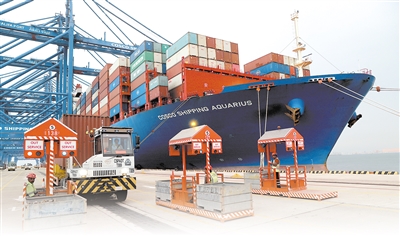
In modern times, the spirit of the Silk Road is still of great significance. At the beginning of the 21st century, the “One Belt, One Road” initiative was proposed to revive this ancient trade route and promote cooperation and development among countries along the route. Today, the Silk Road is not only a symbol of economic cooperation, but also a bridge connecting the past and the future, the East and the West.
Looking back at history, the Silk Road proved the tremendous power of exchanges between human civilizations. It tells us that cooperation and exchanges can transcend national boundaries, races and religions and promote common prosperity in the world. Just as ancient caravans traveled through deserts and mountains, modern cooperation also requires courage and wisdom. Let us inherit this historical legacy and work together to build a more prosperous and inclusive future.