Understanding The “Belt And Road Initiative”: A Strategic Layout Of A Major Country That Will Reshape The Future

Understanding The “Belt And Road Initiative”: A Strategic Layout Of A Major Country That Will Reshape The Future
When globalization encounters countercurrents, and when unilateralism and protectionism rise, China's "One Belt, One Road" initiative has already transcended a simple economic cooperation framework and become a strategic layout for a major country that combines historical depth, global vision and realistic warmth.
When globalization encounters countercurrents, and when unilateralism and protectionism rise, China's "One Belt, One Road" initiative has already transcended a simple economic cooperation framework and become a strategic layout for a major country that combines historical depth, global vision and realistic warmth. It is not a simple "infrastructure export", nor is it a traditional "geographical game". It is a systematic plan based on China's own development experience to solve the global development dilemma and reshape the international cooperation pattern. Its deep logic and strategic intentions are hidden in the deep considerations of three dimensions.

1. Strategic positioning: Global governance thinking from “single-point cooperation” to “system reconstruction”
The core of "One Belt, One Road" is to break away from the limitations of "bilateral mutual benefit" in traditional international relations and shift towards a systemic thinking of "diversity and symbiosis". Its layout is essentially a proactive response to the imbalance of global development and the fragmentation of the governance system.

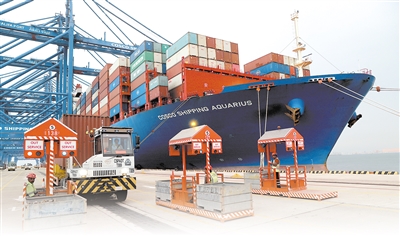
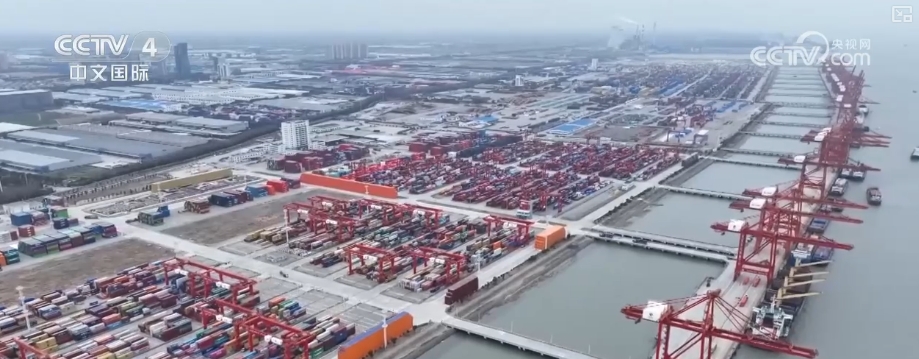
From a geographical perspective, it connects key economic nodes in East Asia, Central Asia, West Asia, Southeast Asia, Europe and even Africa, opening up "three-dimensional channels" of land, sea, air and network. The China-Laos Railway transformed Laos from a "land-locked country" to a "land-linked country", the China-Europe freight train became a "steel camel fleet" that stabilized the global supply chain during the epidemic, and the Piraeus Port made Greece a logistics hub in the Mediterranean. These are not isolated projects, but the key latitude and longitude of weaving an "interconnection network", allowing countries that were originally on the edge of the global value chain to integrate into the broader economic cycle.
From a field perspective, it goes beyond the single category of "economic cooperation" and forms a "five links" closed loop of "policy communication, facility connectivity, unimpeded trade, financial integration, and people-to-people connectivity". Policy communication breaks down institutional barriers, infrastructure connectivity lays a solid foundation for development, unimpeded trade activates market vitality, financial integration solves financing problems, and people-to-people connectivity builds a solid social foundation for all cooperation. This "all-round, multi-level, wide-area" layout allows cooperation to rise from the "project level" to the "mechanism level" and extend from "short-term interests" to "long-term win-win". It is essentially building a new global governance framework.

2. Core logic: a new type of international relations from "central dependence" to "equality and symbiosis"
In traditional globalization, the "center-periphery" dependency pattern has existed for a long time: developed countries occupy the high end of the value chain, while developing countries are mostly in the resource export or low-end manufacturing link. The layout of the “One Belt, One Road” initiative breaks this one-way benefit transmission model. Its core logic is “co-discussion, co-construction, and sharing”—these six words are the key to understanding its role as a great power.

It is not a "one-man show" for China, but a "symphony" for all countries. Different from traditional aid, the "Belt and Road" projects do not attach political conditions or engage in "one word". Instead, they are based on each country's own development needs, jointly planning, jointly building, and jointly benefiting. In Pakistan, the China-Pakistan Economic Corridor not only brings ports and energy projects, but also drives local employment and industrial upgrading; in Africa, the Mombasa-Nairobi Railway not only changes Kenya’s transportation pattern, but also cultivates a large number of local technical talents; in Southeast Asia, the Digital Silk Road allows local small and medium-sized enterprises to access the global market through e-commerce platforms. This model of "equal cooperation, mutual benefit and win-win" allows developing countries to no longer be passive "recipients", but active "participants", truly realizing that "each can contribute to its strengths, each can do its best, and each deserves what he deserves".

On a deeper level, this layout is China's redefinition of "great power responsibility": not to achieve influence through military expansion and political control, but to build a "community with a shared future for mankind" by empowering other countries to develop and activating common potential. It has proved with practical actions that the rise of great powers can not be a "zero-sum game" but a "positive sum and win-win", providing a fresh example for the construction of a new type of international relations.

3. Long-term value: consideration from the historical dimension from “immediate benefits” to “future foundation”
The layout of the “Belt and Road Initiative” has never focused on short-term economic returns, but on the basis of major changes unseen in a century, paving the way for the long-term development of China and the world.

For China, it is an important link in the "domestic and international dual circulation". Through external connectivity, China's excess production capacity has been transformed into development momentum for other countries, and China's technological advantages have been extended into global cooperation opportunities. It has also opened up new space for domestic industrial upgrading and market expansion. More importantly, it has transformed China from a "beneficiary of globalization" to a "shaper of globalization", giving it more say and influence in global governance and creating a more favorable external environment for national rejuvenation.

For the world, it is the "golden key" to cracking the "development deficit". Billions of people around the world are still living in poverty. Poor infrastructure and lack of financing channels are the main bottlenecks restricting development. The Belt and Road Initiative takes infrastructure as the starting point and cooperation as the link, providing real development opportunities for developing countries. The World Bank report shows that the “Belt and Road” project will increase the trade of participating countries by 2.8% to 9.7% and increase global income by 0.7% to 2.9%. Behind these data are the improvement of livelihoods of countless families and the development hope of countless countries.

Of course, as a grand layout that spans dozens of countries and lasts for decades, it also faces geopolitical risks, cultural differences, project sustainability and other issues. But these challenges just show that this is not a "short-term speculation", but a "long-term deep cultivation." China has used ten years of practice to prove that the vitality of the "Belt and Road Initiative" lies in its compliance with the essential needs of globalization - interconnection, mutual benefit and win-win results, and also in compliance with the development direction of human civilization - peaceful development and common prosperity.

4. A “civilized dialogue” with no endpoint
To understand the big country layout of the “One Belt, One Road” initiative, we must eventually jump out of the narrow perspective of “strategic game” and see the civilizational connotations behind it. It is not the "strategic expansion" of a certain country, but an active attempt by human civilization to "cooperate in coping" when facing uncertainty. From the "Camel Bell Caravan" of the ancient Silk Road to the "Steel Torrent" of today's "Belt and Road Initiative", what has changed is the form of cooperation, but what remains unchanged is the Silk Road spirit of "peaceful cooperation, openness and tolerance, mutual learning, mutual benefit and win-win". This layout is essentially China using its own development wisdom to push the world from "division and confrontation" to "cooperation and symbiosis", and from "zero-sum game" to "shared destiny."

It has no end, because mankind's pursuit of a better life has no end; its value will eventually be proven in the precipitation of time to be a great practice of reshaping the future.